If you have spent any time on a pit wall during an endurance race, you have heard the request: "Give me the best strategy." It is the most dangerous sentence in motorsport engineering. The moment a strategist begins to believe in a singular, definitive "answer," the race is essentially over. In a chaotic, high-density environment like a 24-hour race, the only thing you can truly rely on is the math of uncertainty.
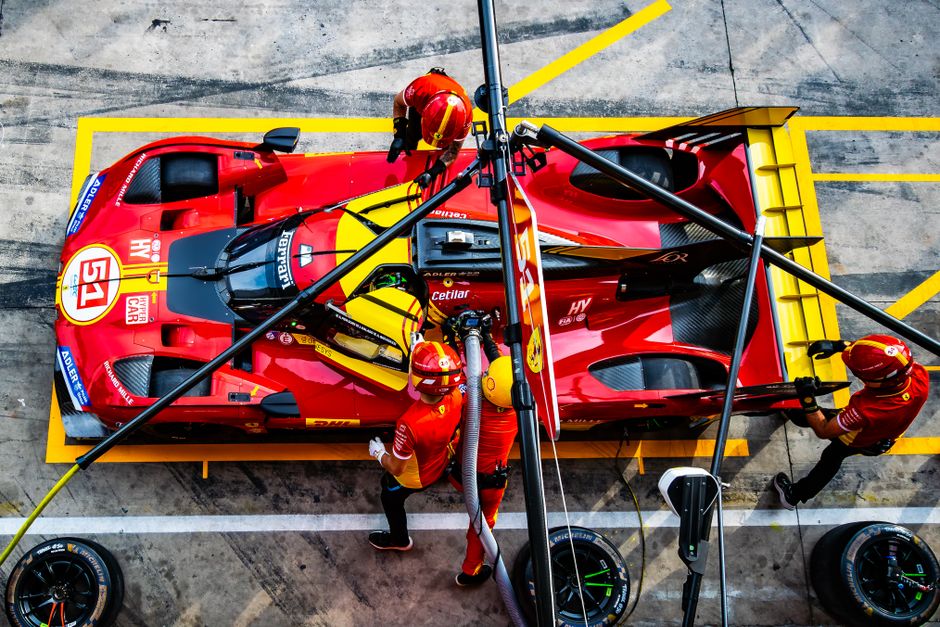
When we talk about probability models in motorsport, we aren't talking about "instinct" or "gut feeling." Those are just polite euphemisms for cognitive biases. We are talking about thousands of potential futures simulated in the span of a few seconds. When a model returns a probability distribution, it isn't failing to give you an answer; it is giving you the only honest answer that exists.
The Monte Carlo Principle: Mapping the Chaos
To understand why we rely on probability, we have to look at how we build these models. Most professional teams use the Monte Carlo principle. Instead of running one calculation based on an "average" lap time, we run the race 10,000 times in a computer environment. In each of those iterations, we vary the variables: fuel consumption, tire degradation, yellow flag duration, and pit lane congestion.
If I run a quick back-of-the-envelope calculation: if we assume a standard deviation of 0.3 seconds per lap due to traffic, over a 300-lap stint, that variance creates a massive window of outcomes. If you rely on a single "mean" time, you are ignoring the 40% of the distribution where your car is stuck behind a slower GT class entry.
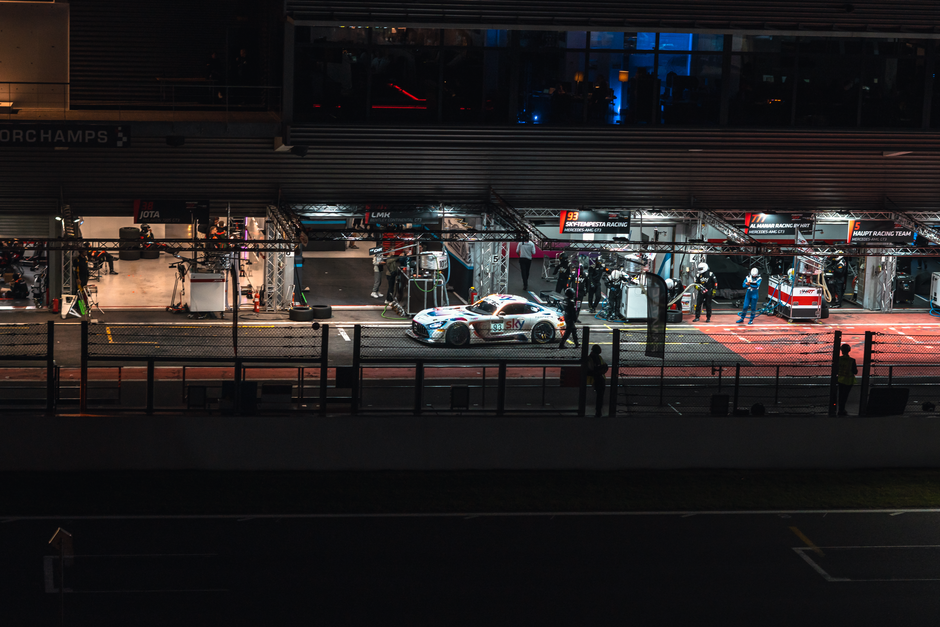
Academic research, such as the work often featured in journals like Applied Sciences (MDPI), confirms that relying on deterministic models in non-linear systems—like endurance racing—leads to catastrophic underperformance during safety car periods. The math doesn't lie: deterministic models are fragile. Probabilistic models are resilient.
Data Density and the Telemetry Trap
People often assume that more telemetry equals more certainty. They believe that if we just monitor every sensor—oil pressure, brake rotor temperature, suspension travel—we will arrive at a deterministic "best" path. This is a fallacy.
Telemetry provides massive data density, but it does not reduce the fundamental uncertainty of the race. If anything, high-density data just highlights how many external variables we cannot control. As explored in various analyses from the MIT Technology Review, the sheer volume of data in complex systems often leads to "analysis paralysis" unless it is distilled into probabilistic outcomes.
When a platform—like the data-driven systems used by teams utilizing MrQ for high-level insight—processes this telemetry, it is not searching for a "game-changing" (a term I loathe) shortcut. It is narrowing the confidence interval. It tells you that there is a 65% probability of hitting your target gap if you pit on lap 42, but only a 30% probability if you wait until lap 45. It isn't telling you what *will* happen; it is telling you what is most likely to survive the interference of the rest of the field.
Comparing Approaches: The Shift from Deterministic to Probabilistic
The transition from a "perfect lap" mindset to a "probabilistic distribution" mindset is the dividing line between winning programs and those that are just making up the numbers. https://reliabless.com/the-mirage-of-the-hot-spin-why-you-cannot-predict-randomness/ The following table illustrates why we moved away from the old ways:
Feature Deterministic Strategy Probabilistic Strategy Core Assumption The race follows a linear path. The race is a series of stochastic events. Data Input Average lap times. Distributions of lap times (inc. traffic). Output "Do this to win." "Do this to maximize your 80% outcome." Risk Tolerance Low; brittle under pressure. High; adapts to variance.It is important to note that this comparison is partial. It assumes the team has the computational power to execute these models. A team without the infrastructure to process these simulations in real-time is effectively flying blind, regardless of how "probabilistic" their framework claims to be.
Real-Time Decision Making: The Pit Wall Pressure Cooker
The pit wall is where these probability models earn their keep. During a race, you might have thirty seconds to decide whether to pit under a Full Course Yellow (FCY) or stay out to gain track position. This is the moment where "instinct" is often cited as the deciding factor, but that is a dangerous myth.
When I am on the wall, I don't ask, "What is the best move?" I look at the probability distribution. I want to know the "Expected Value" (EV) of the stop.
Scenario A: Pit now. Lose 15 seconds to the field, but gain fresh tires for the restart. Probability of podium: 62%. Scenario B: Stay out. Gain track position, but fall off a cliff on old tires in 5 laps. Probability of podium: 28%.If the model says 62% versus 28%, the choice isn't instinctual—it’s arithmetic. The challenge arises when the numbers are tighter, say 48% vs 46%. That is when the strategist’s role changes from a calculator to a risk manager. You are not choosing the "right" answer; you are choosing the risk profile your team is willing to accept.
Beyond the Hype: The Reality of Motorsport Strategy
We need to stop overstating the certainty of our models. When someone in the paddock tells you their software has "solved" the race, they are either lying or they have forgotten that a GT3 car can spin into the gravel at any moment. There is no software that replaces the reality of a variable-driven environment.
Probability models are not a roadmap to a guaranteed win. They are a way to quantify our ignorance. By embracing the distribution of possible outcomes, we allow ourselves to be wrong without being ruined. If you know there is a 20% chance of a catastrophic event ruining your strategy, you can build a hedge. If you insist on a deterministic path, a single, minor event will destroy your entire plan.
In conclusion, when a model gives you a probability, it is inviting you to manage risk, not avoid it. It is a tool for the disciplined, not the lucky. The next time you Helpful hints hear a strategist talk about "instinct," watch their hands. If they aren't looking at a distribution curve, they aren't strategizing—they're guessing. And in this business, guessing is the most expensive way to lose.
Summary Checklist for Strategic Evaluation:
- Does your model account for traffic variance, or just "clean air" lap times? Are you checking the 95th percentile of risk, or just the mean outcome? Have you sanity-checked the model's output against the physical limits of the fuel cell and tire wear? Is your team prepared to pivot when the real-time telemetry diverges from the initial simulation?
If you cannot answer these with a clear "yes," your strategy isn't probabilistic—it's just wishful thinking with a spreadsheet.