I spent eight years standing on pit walls, staring at monitors that blinked faster than human eyes could track. When a race director throws a Full Course Yellow or a driver reports a subtle vibration, the broadcast commentators often reach for the word "instinct." They talk about a crew chief "feeling" that it’s time to pit.
Let’s clear the air immediately: there is no such thing as "instinct" in a professional endurance racing garage. There is only high-speed risk assessment based on incomplete information. Strategy isn’t a gut feeling; it is the management of probability.
If you want to understand how races are won before the checkered flag drops, you have to stop thinking about outcomes as "certainties" and start thinking about them as "distributions." Here is how we break it down, in about two minutes of reading.
Probability Over Certainty: The Death of the "Game-Changing" Myth
Too often, we hear people describe a mid-race tactical switch as "game-changing." That term is lazy. In reality, no single decision changes the game; it merely shifts the probability of success from, say, 12% to 18%.
As I often note in my own napkin-math sanity checks: if you have 30 cars on the grid, and you are running P5, your probability of winning is roughly 3.3% if all variables were equal. They aren't. Telemetry data tells us your degradation curve is 0.02 seconds steeper than the leader. Suddenly, your win probability drops to 1.1%. You aren't "playing the game"; you are navigating a narrowing funnel of likelihoods.
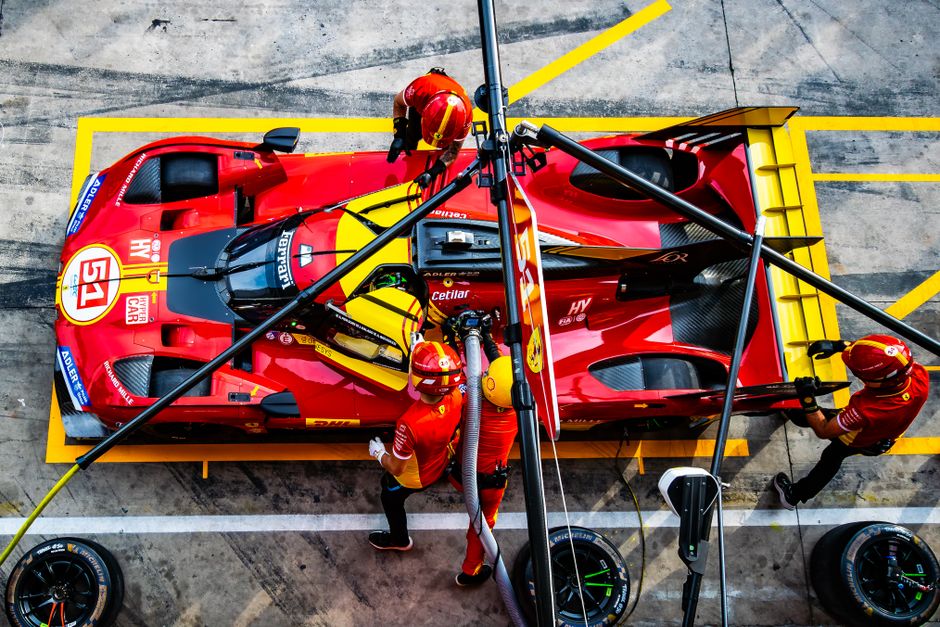
The MIT Technology Review has long highlighted how algorithmic thinking is permeating sectors like logistics and high-frequency trading—motorsport is simply the physical manifestation of those same racingsportscars principles. We aren't looking for a "miracle" strategy; we are looking for the path with the highest probability of avoiding a catastrophic drop in position.
The Monte Carlo Principle: Simulating the Impossible
How do we quantify that probability? We use the Monte Carlo principle. Imagine you want to know if you can stretch your fuel to the end of the race without a splash-and-dash. You don't just guess based on the last five laps. You run ten thousand simulated versions of the remaining 20 minutes.
In simulation A, a yellow flag occurs at T-minus 12 minutes. In simulation B, the track stays green, but your tire degradation hits a cliff. In simulation C, the car ahead of you pits early and gets trapped in traffic.
By running these thousands of permutations, you get a probability distribution—a bell curve that shows you not just the "average" outcome, but the range of extreme results. As noted in research published by Applied Sciences (MDPI), stochastic modeling in dynamic environments is the gold standard for predicting performance where variables are highly volatile. You aren't betting on one outcome; you are betting on the outcome that appears in the highest density of your simulations.
Key Variables in the Model
Variable Impact on Model Data Source Fuel Flow / Map High CAN bus telemetry Tire Degradation Critical Surface temp sensors / lateral load data Traffic Density Moderate Live track position/sector timing Probability of Safety Car Systemic Historical race trendsTelemetry: The Foundation of Data Density
Ask yourself this: you cannot have good probability models without good data density. When fans talk about "telemetry," they often think of a simple speed trace. But a modern prototype car transmits hundreds of channels of data. We aren't just looking at speed; we are looking at oil pressure fluctuations, brake bias shifts, and even the vibration frequency of specific suspension components.
This "density" allows us to build a more accurate digital twin of the car. If I know that my driver is consistently over-heating the left-front tire in Sector 2, I don't need a "hunch" to know they are approaching a performance cliff. I have the data density to calculate exactly how many more laps we have before the lap time delta exceeds the cost of a pit stop.
It’s important to note: a digital twin is only a partial representation of reality. It cannot account for a driver suddenly deciding to take a defensive line that adds 0.4 seconds to their lap time. No model is perfect, but a model with high data density is significantly less wrong than a human brain operating on memory alone.
Real-Time Decision Making: The Pit Wall Environment
On the pit wall, the goal is to reduce the "time-to-decision." We use tools like those seen in platforms such as MrQ to understand how risk is priced in dynamic environments—though in racing, our "odds" are calculated in real-time based on the field’s live telemetry.
When the pressure is on, we don't ask, "What should we do?" We ask, "What is the expected value of our current strategy versus the alternative?"
- Identify the trigger: Is it a mechanical degradation or a tactical gap? Run the simulation: Execute a Monte Carlo sweep of the next 10 laps. Evaluate the tails: Look at the 5th and 95th percentiles of the distribution. If the 5th percentile is a "DNF" (Did Not Finish), we discard that strategy regardless of the potential reward. Communicate: Relay the decision to the driver using concise, data-backed instruction.
This process is not "instinctive." It is algorithmic. It is deliberate. And most importantly, it is repeatable.
Why Fans Get It Wrong (And How to Fix It)
The most common error fans make is looking at a successful strategy and calling it "genius." If you make a risky call to stay out on old tires and a safety car happens to come out perfectly, that wasn't genius; that was a high-variance outcome. You essentially played a hand of poker and hit your one-outer on the river.
To evaluate a strategist properly, don't look at the result. Look at the process. Would that same decision have worked in 70% of the possible scenarios? If yes, it was a sound probabilistic choice. If no, the team just got lucky.
Final Thoughts: Moving Beyond the "Guessing" Game
Probability explained is essentially the art of humility. It is the recognition that we cannot know exactly what will happen on the next lap, but we can know the likelihood of a range of outcomes.

When you watch the next race, don't just watch the gap on the timing screen. Watch the pit wall. When you see someone looking at a screen rather than the track, they aren't "lost in the numbers"—they are calculating the future. They are running the simulations that separate the winners from those who are simply hoping for the best.
Racing isn't a game of instinct. It’s a game of managing distributions. If you can master the math, you don't need luck. You just need a better model than the guy sitting on the pit wall next to you.. Exactly.